

a. Location
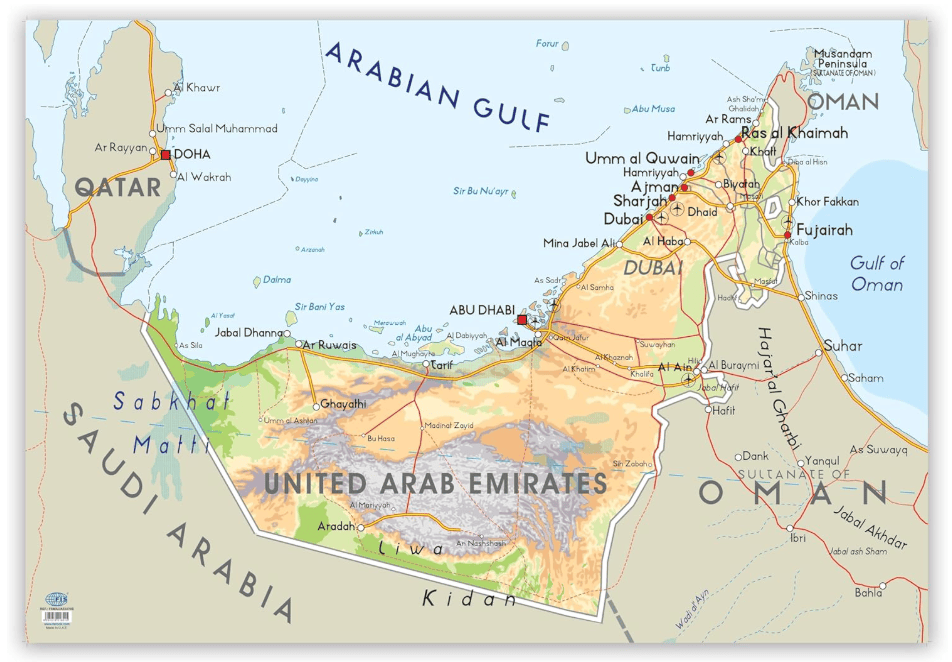
The United Arab Emirates (UAE) is located on the southeastern corner of the Arabian Peninsula, where the Arabian Gulf meets the Gulf of Oman. It shares borders with Saudi Arabia to the south and west, and Oman to the east and southeast.
The UAE is a federation of seven emirates: Abu Dhabi, Dubai, Sharjah, Ajman, Umm Al Quwain, Ras Al Khaimah, and Fujairah.
Liwa Oasis, home to the world’s largest sand desert—the Rub’ al Khali (Empty Quarter)—is located in the Al Dhafra Region of the Emirate of Abu Dhabi, approximately 250 km southwest of Abu Dhabi City.
b. Brief history and political system
Before the formation of the UAE, the emirates were known collectively as the Trucial States, reflecting a series of treaties concluded between their rulers and the British government during the 19th century.
Following Britain’s decision to withdraw from the region, the rulers worked toward establishing a federation. The United Arab Emirates was founded on 2 December 1971 by six emirates, with Ras Al Khaimah joining the federation in 1972.
Today, the UAE is a federation of seven emirates. The Federal Supreme Council, comprising the rulers of the seven emirates, is the highest constitutional authority of the country. The current President of the UAE is Sheikh Mohamed bin Zayed Al Nahyan, Ruler of Abu Dhabi, and the Vice President and Prime Minister is Sheikh Mohammed bin Rashid Al Maktoum, Ruler of Dubai.
c. Area and population
The UAE covers an area of approximately 83,600 square kilometres. Abu Dhabi is by far the largest of the seven emirates and accounts for most of the country’s land area, followed by Dubai, Sharjah and the Northern Emirates. The UAE has a diverse and rapidly growing population, with expatriate residents representing a significant proportion of the people living and working in the country.
d. Local time and working hours
The UAE operates on Gulf Standard Time (GST), which is UTC+4 throughout the year. The standard working week generally runs from Monday to Friday, although working hours vary between government and private-sector organizations. Many shops, restaurants and shopping malls remain open seven days a week, often until late in the evening.
e. Currency
The currency of the United Arab Emirates is the UAE Dirham, abbreviated as AED (or sometimes Dhs). The dirham is officially pegged to the US dollar at approximately AED 3.67 to USD 1.Credit and debit cards are widely accepted throughout the UAE, although carrying some cash can be useful in smaller shops and more remote areas.
You may visit this link for updates on currency: http://www.xe.com/
f. Language
Arabic is the official language of the UAE. English is widely spoken and is commonly used in business, tourism, hotels, restaurants and everyday communication.
g. Religion
Islam is the official religion of the UAE. The country is also home to people of many other faiths, with churches, temples and other recognized places of worship serving its diverse communities.
h. Weather
The UAE has a hot, arid desert climate with sunshine throughout most of the year. Summers are very hot and can also be humid, particularly along the coast, while the cooler months from approximately October to April offer much more comfortable conditions for outdoor activities and desert excursions.
Temperatures in the desert can vary considerably between day and night, especially during winter. Visitors planning desert activities should therefore bring suitable clothing for both daytime and evening conditions.
i. Transportation
The UAE has a modern transportation network. Taxis and public buses are widely available, while Dubai also has an extensive Metro and tram network. Abu Dhabi continues to expand its public transport services, including buses and other mobility options.
Car rental is also widely available and can be convenient for visitors wishing to explore areas outside the main cities.
https://dot.abudhabi.ae and http://www.rta.ae
j. Emergency numbers
In case of an emergency in the UAE, the main numbers are: Police – 999, Ambulance – 998, and Civil Defence / Fire – 997.
For non-emergency situations, visitors can also seek assistance from their hotel, tour operator or the relevant local authorities.
k. Electricity
The UAE electricity supply is approximately 230V at 50Hz. The standard socket is Type G, using the British-style three-pin plug. Visitors using other plug types should bring or purchase a suitable travel adapter.
l. Communication
The UAE has a modern and extensive mobile and internet network. Visitors can purchase prepaid SIM cards and mobile data packages from the country’s telecommunications providers, with outlets available at airports, shopping malls and other locations. Wi-Fi is also widely available in hotels, restaurants, shopping malls and many public areas.
m. Entry visa regulations
UAE entry and visa requirements depend on your nationality, passport, purpose of travel and intended length of stay. Citizens of some countries may receive a visa or entry permit on arrival, while others must arrange a visa before travelling.
Visitors should always check the latest entry requirements with the official UAE authorities or their airline before travelling.
The following categories of visitors may receive their visit visa at the airport or other point of entry, upon arrival. see this link for the latest in visa regulations https://government.ae/en/information-and-services/visa-and-emirates-id
n. Driving licence
Visitors wishing to rent a car in the UAE must hold a driving licence that is valid for use in the country. Depending on the country that issued your licence, an International Driving Permit may also be required. Minimum driver-age requirements and other conditions vary between rental companies.
Road signs throughout the UAE are generally displayed in both Arabic and English. Visitors planning to rent a vehicle should confirm the current licence, age and insurance requirements with their chosen rental company before travelling.
o. Public holidays
The UAE observes both national and Islamic public holidays. Islamic holidays follow the Hijri lunar calendar, so their Gregorian dates vary from year to year and some dates are confirmed closer to the occasion.
Visitors should check the official UAE government information for current public-holiday dates when planning their trip.
Check this link for current year public holidays: https://www.government.ae/en/information-and-services/public-holidays-and-religious-affairs/public-holidays